Enterprises are under constant pressure to deliver innovative web applications faster than ever. Speed, however, must never come at the expense of security. In this guide we break down the most effective application security strategies, practical web security practices, and real‑world tactics that keep your code safe from today’s sophisticated threats.
Why Secure Web Application Development Matters
Data breaches cost companies millions in remediation, legal fees, and lost reputation. A single vulnerable endpoint can expose customer records, intellectual property, and critical infrastructure. For large organizations, the ripple effect reaches partners, regulators, and shareholders. Embedding security into the development process not only protects assets but also accelerates compliance with standards such as ISO 27001, PCI‑DSS, and GDPR.
Foundational Principles
Shift‑Left Security
Move security checks earlier in the software development lifecycle (SDLC). By integrating static code analysis, dependency scanning, and threat modeling during design and coding, teams catch flaws before they become expensive rework.
Zero Trust Architecture
Assume every component—user, service, or device—could be compromised. Enforce strict identity verification, least‑privilege access, and continuous validation of trust. Zero Trust reduces the blast radius of any breach.
Secure Development Lifecycle (SDLC) Steps
Planning & Threat Modeling
Start with a clear security vision. Identify assets, potential attackers, and attack vectors. Use frameworks like STRIDE or PASTA to document threats and define mitigations before a single line of code is written.
Secure Coding Standards
Adopt language‑specific guidelines (e.g., OWASP Secure Coding Practices, CERT). Enforce rules such as:
- Never trust client‑side input.
- Prefer parameterized queries over string concatenation.
- Use built‑in libraries for cryptography instead of custom implementations.
Static and Dynamic Analysis
Run automated scanners on every commit:
- Static Application Security Testing (SAST) for code‑level defects.
- Dynamic Application Security Testing (DAST) against a running instance.
- Software Composition Analysis (SCA) to track vulnerable third‑party libraries.
Penetration Testing
Schedule regular manual and automated pen tests. Focus on high‑value APIs, authentication flows, and data‑exfiltration pathways. Document findings in a ticketing system and track remediation time.
Continuous Monitoring
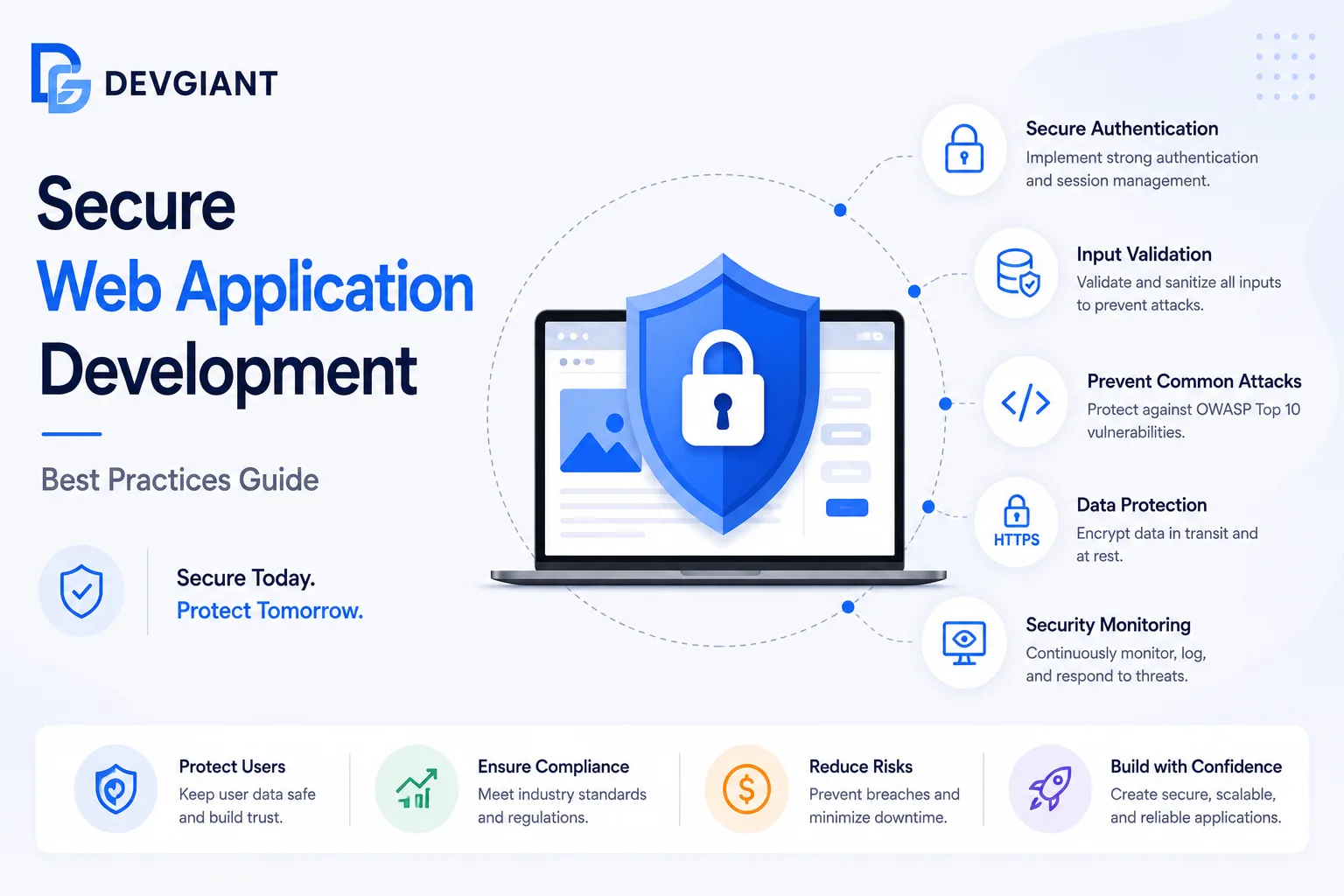
Deploy Runtime Application Self‑Protection (RASP) and Web Application Firewalls (WAF) in production. Correlate logs with a Security Information and Event Management (SIEM) platform to detect anomalies in real time.
Key Web Security Practices
Input Validation & Output Encoding
Validate data against a whitelist of allowed characters or formats. Encode output based on context (HTML, JavaScript, SQL) to neutralize injection attacks.
Authentication & Authorization
Implement multi‑factor authentication (MFA) and use standards such as OAuth 2.0, OpenID Connect, and SAML. Enforce role‑based access control (RBAC) and regularly review permissions.
Secure Session Management
Generate cryptographically strong session IDs, set the Secure and HttpOnly flags on cookies, and enforce short idle timeouts. Rotate tokens after privilege changes.
Encryption In Transit and At Rest
Force TLS 1.2+ with strong cipher suites for all communications. Encrypt sensitive data at rest using AES‑256 or higher, and manage keys with a dedicated Key Management Service (KMS).
Security Headers & Content Security Policy (CSP)
Deploy HTTP security headers such as Strict-Transport-Security, X-Content-Type-Options, X-Frame-Options, and a restrictive CSP to mitigate click‑jacking, MIME‑sniffing, and cross‑site scripting (XSS).
Common Pitfalls and How to Avoid Them
- Relying on “security through obscurity.” Keep security mechanisms transparent and testable.
- Hard‑coding secrets. Use environment variables or secret vaults.
- Skipping dependency updates. Automate SCA alerts and schedule regular patch cycles.
- Inadequate logging. Log authentication events, privilege changes, and error responses without exposing sensitive data.
- Neglecting mobile or API endpoints. Apply the same security controls across all client types.
Tools and Automation for Enterprises
- SAST: SonarQube, Checkmarx, Veracode.
- DAST: OWASP ZAP, Burp Suite, Acunetix.
- SCA: Snyk, Dependabot, WhiteSource.
- CI/CD Integration: Jenkins, GitHub Actions, GitLab CI with security gates.
- Container Security: Trivy, Aqua, Twistlock.
Measuring Success
Track metrics that reflect both security posture and development velocity:
- Mean Time to Detect (MTTD) and Mean Time to Remediate (MTTR) vulnerabilities.
- Percentage of code covered by automated security tests.
- Number of high‑severity findings per release.
- Compliance audit scores and remediation backlog trends.
Regularly review these KPIs with leadership to demonstrate the ROI of secure web application development.
Conclusion
Building resilient web applications is no longer a “nice‑to‑have” – it’s a business imperative. By embedding the practices outlined above, enterprises can reduce risk, accelerate delivery, and stay ahead of attackers.
Ready to elevate your security program? Explore our tailored services for secure SDLC adoption, or get in touch to start a conversation today.