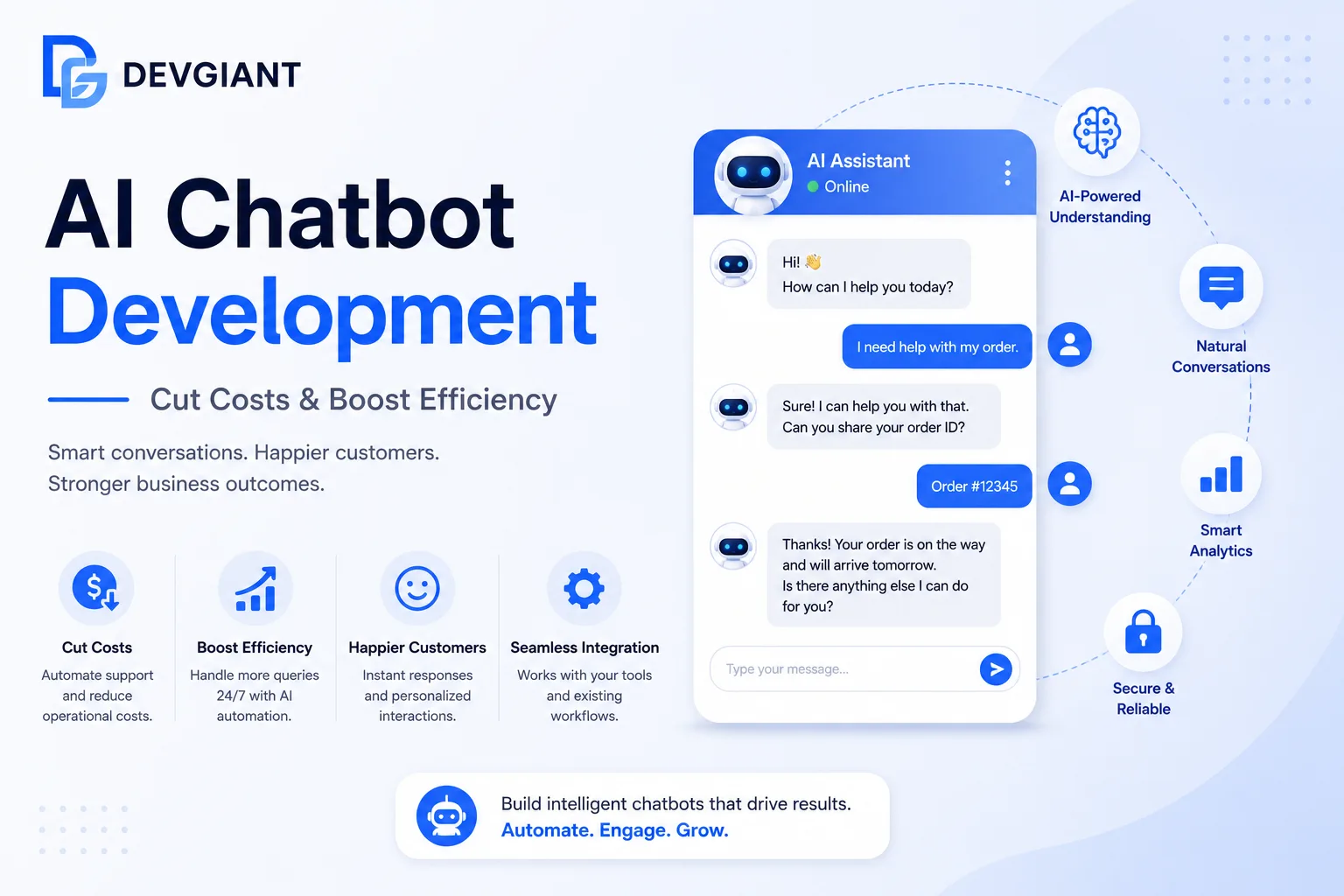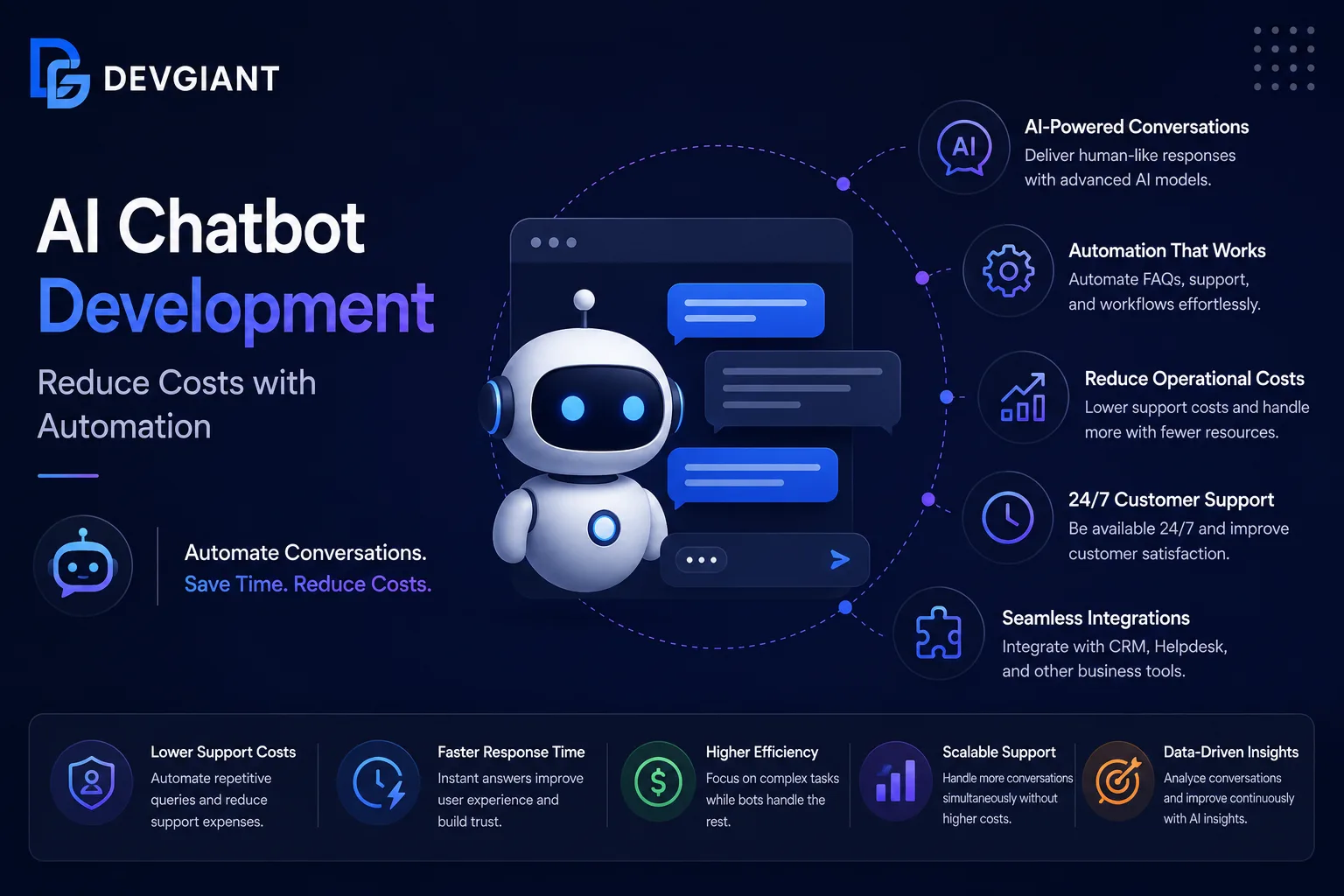
Imagine a 24/7 customer‑service team that never asks for a raise, never calls in sick, and instantly delivers accurate answers. That team exists today, and it’s powered by AI chatbot development. For SaaS companies and any business that handles a steady stream of inquiries, the financial upside is hard to ignore. In this guide we’ll explore exactly how AI chatbots cut expenses, the technology that makes it possible, and a step‑by‑step plan to start saving right now.
Why Cost Reduction Matters in Modern Business
Operating margins are under constant pressure from rising labor costs, higher customer‑expectation standards, and the need for rapid scaling. Traditional support models—phone lines, email queues, and manual ticket triage—consume valuable human hours and often generate avoidable errors. When every support interaction costs $5–$10 in labor, a volume of 10,000 monthly tickets can drain $50,000–$100,000 from the bottom line.
AI chatbots address three core cost drivers:
- Labor: Automate routine queries so agents focus on high‑value issues.
- Error remediation: Reduce costly mistakes caused by miscommunication or delayed responses.
- Infrastructure: Lower the need for oversized call‑center hardware and software licenses.
By tackling these areas, businesses free cash for product development, marketing, or profit reinvestment.
AI chatbot development fundamentals
Choosing the right chatbot software
The market offers dozens of platforms—from low‑code builders to fully programmable frameworks. The best choice aligns with three criteria:
- Scalability: Can the solution handle spikes in traffic without performance degradation?
- Integration depth: Does it connect natively to your CRM, ticketing system, and knowledge base?
- Training flexibility: Are you able to feed custom intents and entities without needing a data‑science team?
Platforms such as Dialogflow Enterprise, Microsoft Bot Framework, and open‑source Rasa provide the backbone for AI support automation. Evaluate pricing models (per‑message vs. per‑seat) to ensure the software itself does not erode the savings you aim to achieve.
Integrating AI support automation
AI support automation isn’t just a chatbot on a website. It’s a coordinated ecosystem that includes:
- Natural Language Understanding (NLU) engines that interpret user intent.
- Knowledge‑base retrieval that pulls the most relevant article or FAQ.
- Escalation workflows that hand off complex cases to human agents with full context.
When these components speak to each other through APIs, the chatbot can resolve up to 80% of routine tickets without human involvement—a key metric for cost reduction.
Direct cost‑saving mechanisms
Cutting customer‑service labor
Assume an average agent salary of $45,000 per year, plus benefits and overhead (≈30%). That’s roughly $58,500 per full‑time equivalent (FTE). If a chatbot handles 70% of a 5,000‑ticket month, you could reduce the required FTEs by 2.5, saving over $140,000 annually.
Minimizing error‑related expenses
Human agents occasionally provide incorrect information, leading to refunds, compliance penalties, or brand damage. AI chatbots, trained on vetted knowledge, maintain a consistency rate above 95%. The reduction in error‑related costs can be quantified by tracking refund rates before and after deployment.
Optimizing workflow with self‑service
Self‑service portals powered by chatbot software let customers reset passwords, check order status, or update subscription plans instantly. Each self‑service interaction eliminates a ticket, which translates directly into labor savings and faster resolution times—both critical for SaaS churn reduction.
Real‑world use cases
- Subscription management: A SaaS firm integrated a chatbot that processes plan upgrades, downgrades, and cancellations. The bot handled 6,200 monthly requests, cutting support tickets by 45%.
- Technical troubleshooting: An IT services company deployed an AI chatbot to diagnose common connectivity issues. First‑contact resolution rose from 58% to 82%, reducing the need for on‑site visits.
- Billing inquiries: An e‑commerce platform’s chatbot answered invoice questions in real time, slashing refund processing time from 48 hours to under 5 minutes.
Measuring ROI and scaling intelligently
To prove the financial impact, track these KPIs:
- Cost per ticket (CPT): Total support spend ÷ total tickets.
- Automation rate: Percentage of tickets resolved without human hand‑off.
- First‑contact resolution (FCR): Successful resolutions on the first interaction.
- Customer satisfaction (CSAT): Survey scores before and after bot deployment.
Calculate ROI with the formula:
ROI = (Annual Savings – Annual Bot Costs) ÷ Annual Bot Costs × 100%
When the ROI exceeds 200%, most enterprises consider the project a success and expand the bot’s scope to new channels (WhatsApp, Slack, voice assistants).
Implementation checklist
- Define high‑volume, low‑complexity intents (e.g., password reset, order status).
- Select a chatbot platform that supports your existing tech stack.
- Build a curated knowledge base; keep it up‑to‑date.
- Train the NLU model with real customer utterances.
- Set up escalation rules and ensure agents receive full conversation context.
- Run a pilot on a single channel; measure CPT and automation rate.
- Iterate based on analytics; gradually increase coverage.
- Promote the chatbot on your website, app, and email signatures.
Conclusion & next steps
AI chatbot development is no longer a futuristic experiment; it’s a proven method for slashing support costs, improving efficiency, and delivering a consistent customer experience. By choosing the right chatbot software, integrating robust AI support automation, and monitoring ROI, businesses of any size can turn a cost center into a competitive advantage.
Ready to see how a custom AI chatbot can transform your support operations? Get in touch today for a free assessment and start saving tomorrow.