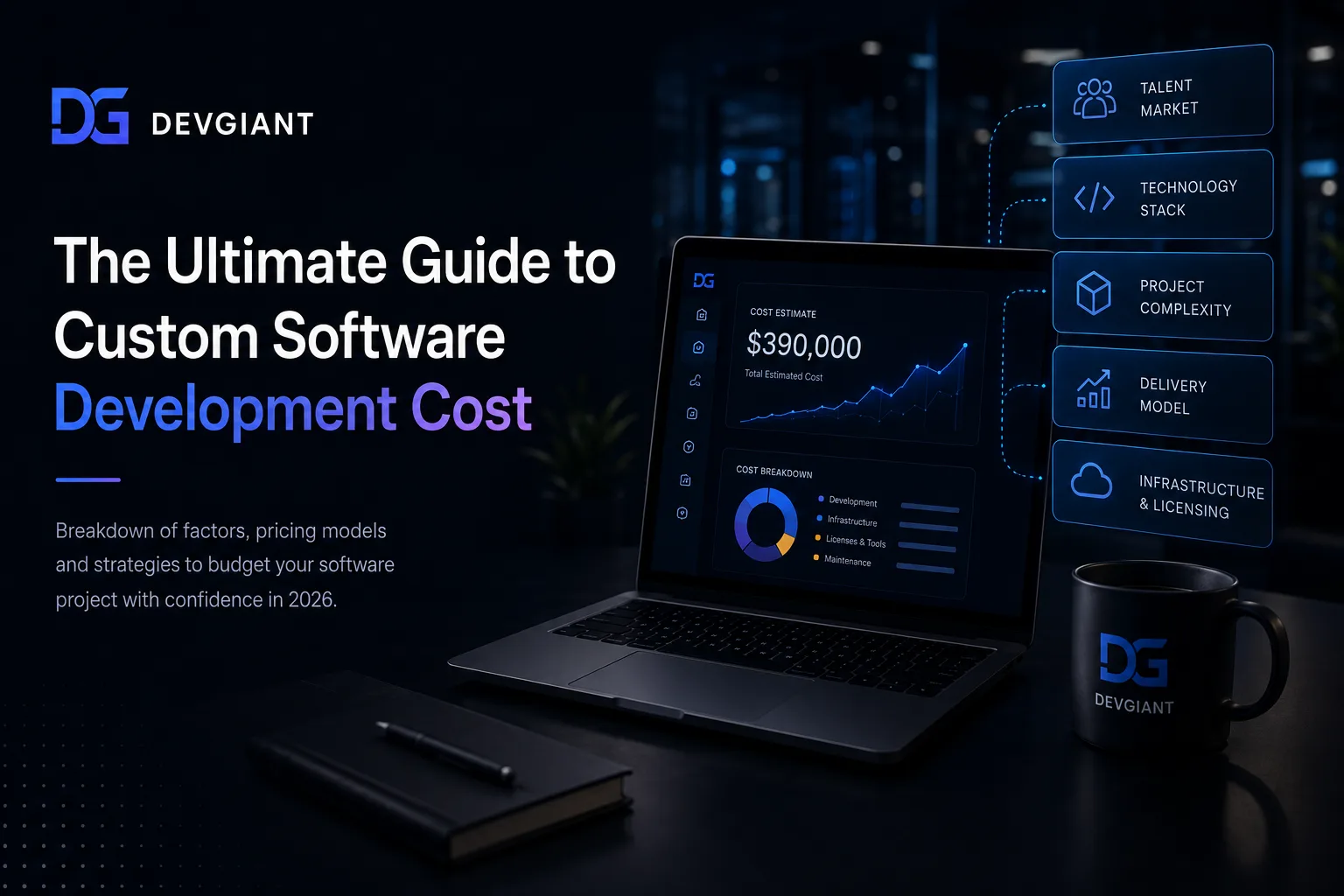
Business owners and founders are constantly weighing the ROI of a new software project against the price tag it carries. In 2026 the landscape has shifted—cloud services are cheaper, AI‑driven tools are more affordable, but talent scarcity still drives up wages. This guide breaks down every component that shapes custom software development cost today, so you can budget with confidence and negotiate from a position of knowledge.
Why Understanding Pricing Matters Now
Every dollar you allocate to a software project is an investment in future revenue, operational efficiency, or competitive advantage. Mis‑estimating the cost can lead to:
- Scope creep that drains resources.
- Delayed time‑to‑market, giving rivals a head start.
- Compromised quality that hurts brand reputation.
Accurate pricing also helps you decide whether to build in‑house, outsource, or adopt a hybrid model. The decisions you make now will echo for the next 3‑5 years of product lifecycle.
Key Drivers of Custom Software Development Cost
1. Talent Market Dynamics
Full‑stack engineers, data scientists, and AI specialists command premium rates. In North America and Western Europe the average hourly rate for senior developers sits between $120‑$180, while emerging hubs in Eastern Europe, Latin America, and Southeast Asia offer $45‑$80 per hour for comparable expertise.
2. Technology Stack Choices
Choosing a bleeding‑edge stack (e.g., Rust for backend, Flutter for cross‑platform UI) can increase initial development time but may reduce long‑term maintenance costs. Conversely, legacy stacks (Java EE, .NET Framework) are cheaper to staff but often require more effort to integrate with modern services.
3. Project Complexity & Scope
Complexity is measured by the number of integrations, data volume, security requirements, and regulatory compliance (GDPR, HIPAA, etc.). A simple MVP with a single API integration may cost $50k‑$80k, while an enterprise‑grade platform with multi‑tenant architecture, AI analytics, and real‑time processing can exceed $1 million.
4. Delivery Model
Fixed‑price contracts, time‑and‑materials, and dedicated team models each affect risk and cost predictability. Fixed‑price offers budget certainty but often includes a risk premium. Time‑and‑materials provides flexibility but requires tight project management.
5. Infrastructure & Licensing
Cloud hosting (AWS, Azure, GCP) pricing is consumption‑based. Expect $0.10‑$0.30 per compute hour for standard workloads, plus storage, data transfer, and managed services fees. Third‑party SaaS licenses (e.g., Stripe, Twilio) add per‑transaction or per‑user costs that must be baked into the budget.
Common Software Development Pricing Models
Fixed‑Price
Best for well‑defined projects with clear requirements. The vendor delivers a set scope for an agreed amount, typically 10‑20% higher than the estimated time‑and‑materials cost to cover risk.
Time‑and‑Materials (T&M)
Charges are based on actual hours worked. Ideal for agile projects where scope evolves. Requires diligent tracking and a strong product owner to keep the budget in check.
Dedicated Team
A hybrid approach where you hire a full‑time team from an external provider. You pay a monthly rate per resource, often 15‑25% lower than the equivalent T&M rate because the provider absorbs overhead.
Outcome‑Based Pricing
Emerging in 2026, some firms tie payment to KPIs (e.g., user acquisition, revenue milestones). This aligns incentives but can be risky if market conditions shift.
Building a Realistic Software Development Budget
Use the following checklist to create a budget that survives the inevitable changes of an agile lifecycle.
- Define MVP scope. List core features, user flows, and required integrations.
- Estimate effort. Multiply story points by a calibrated velocity (e.g., 8 points per sprint) to get sprint count.
- Apply hourly rates. Use regional averages: US/Canada $150/hr, EU $120/hr, LATAM $70/hr, APAC $55/hr.
- Factor in contingency. Add 15‑20% for scope changes, regulatory updates, or unexpected technical debt.
- Include infrastructure. Project 6‑12 months of cloud usage based on load testing results.
- Account for licensing. Add per‑user or per‑transaction fees for third‑party services.
- Plan for post‑launch. Allocate 20% of total development cost for maintenance, monitoring, and iterative improvements.
Example: A mid‑size SaaS platform with 5 core modules, 3 third‑party APIs, and a 12‑month roadmap might break down as follows:
- Development effort: 2,500 hours × $100 average = $250,000
- Contingency (18%): $45,000
- Cloud & hosting (12 months): $30,000
- Licensing (Stripe, SendGrid, Auth0): $15,000
- Maintenance (first year): $50,000
- Total estimated cost: $390,000
Enterprise Software Cost vs. SMB Projects
Enterprise solutions demand higher security, scalability, and compliance, which inflates cost in three main ways:
- Architecture. Multi‑tenant, high‑availability clusters add $150‑$300k.
- Compliance. Audits, certifications, and data residency requirements can add $50‑$100k.
- Support SLA. 24/7 support with sub‑hour response times often carries a premium of 20‑30% on top of development fees.
SMB projects, by contrast, can often rely on single‑tenant designs, open‑source security tools, and standard support windows, keeping the total cost under $250k for comparable functionality.
Tips to Reduce Costs Without Sacrificing Quality
Leverage Low‑Code/No‑Code for Internal Tools
Platforms like Retool or Bubble can prototype admin dashboards in days rather than weeks, freeing senior engineers for core product work.
Adopt a Modular Architecture
Build reusable micro‑services that can be leveraged across future projects. The upfront cost is higher, but long‑term savings compound.
Use Cloud‑Native Managed Services
Instead of self‑hosting databases, use managed offerings (Amazon RDS, Azure Cosmos DB). You pay per usage, but you eliminate DBA overhead.
Negotiate Milestone Payments
Structure contracts so a portion of the fee is released only after you validate key deliverables. This keeps the vendor focused on outcomes.
Invest in Automated Testing
Automation reduces regression bugs and shortens release cycles. A modest investment of 10% of development time in test coverage can cut post‑launch defect costs by up to 40%.
Choosing the Right Development Partner
Not all vendors are created equal. Evaluate candidates against these criteria:
- Domain expertise. Look for proven experience in your industry.
- Transparent pricing. Ask for a detailed breakdown of rates, overhead, and risk premiums.
- Agile maturity. Teams that practice Scrum or Kanban deliver faster and adapt better.
- Post‑launch support. Ensure the contract includes a maintenance window or a clear hand‑off plan.
Ready to explore options? Our development services are built around transparent pricing and dedicated teams that align with your business goals.
Conclusion & Next Steps
Understanding the components of custom software development cost empowers you to allocate resources wisely, negotiate better contracts, and avoid costly overruns. Use the budgeting framework above, ask the right questions of potential partners, and continuously monitor spend against milestones.
Ready to turn your vision into a profitable product? Contact our experts today and get a tailored cost estimate that aligns with your growth strategy.