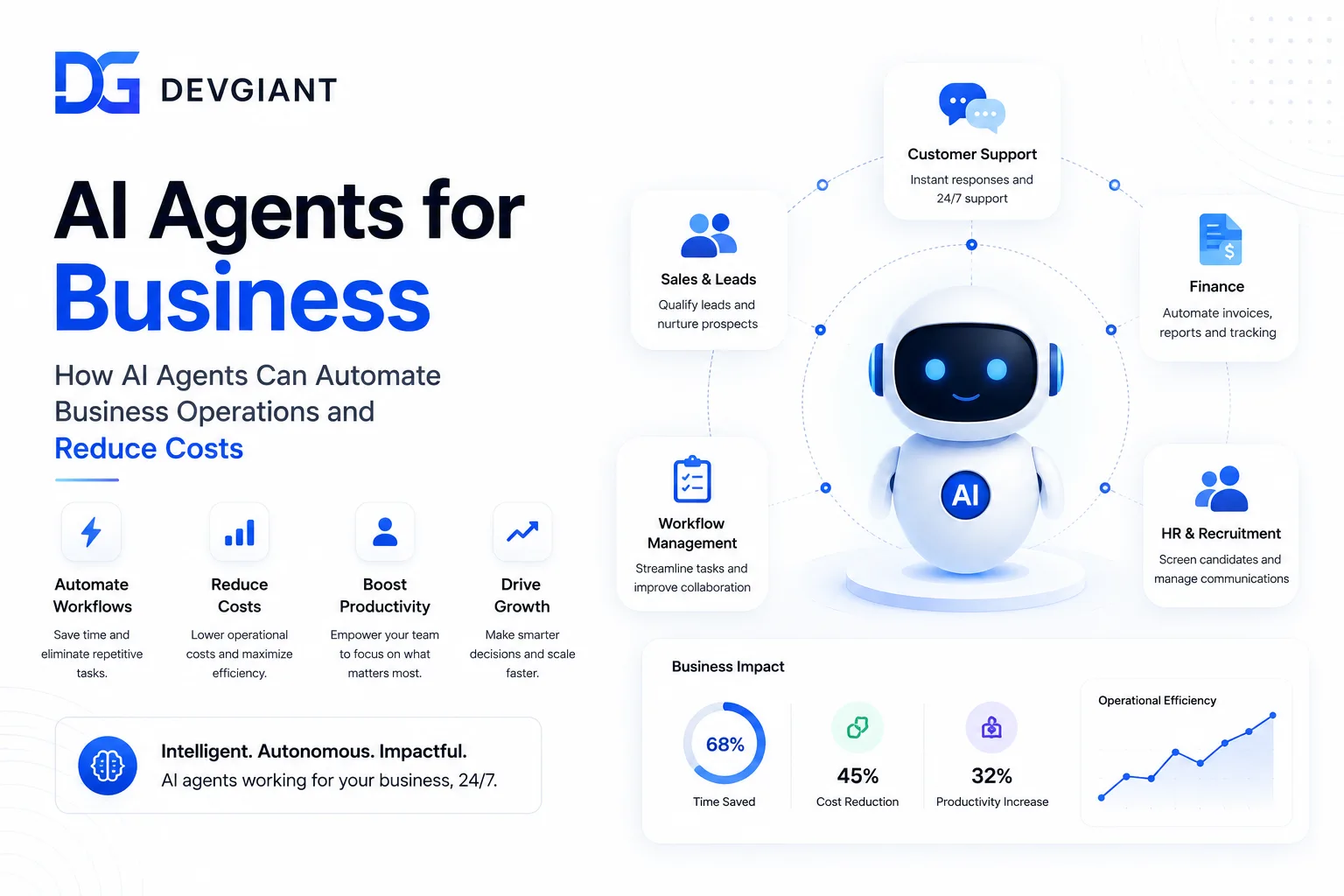
Artificial Intelligence is rapidly transforming how companies operate, communicate, and scale. While many businesses are already using automation tools, a new generation of intelligent systems known as AI agents is taking automation to the next level.
Unlike traditional automation, which follows predefined
rules, AI agents can analyze information, make decisions, learn from
interactions, and perform tasks with minimal human intervention. This
capability allows businesses to automate complex workflows, improve
productivity, and reduce operational costs.
In this guide, we'll explore what AI agents are, how they
work, and how businesses can leverage them to automate operations and gain a
competitive advantage.
What Are AI Agents?
AI agents are intelligent software systems designed to
perform tasks, make decisions, and interact with users or other systems
autonomously.
Unlike standard automation software that executes fixed
instructions, AI agents can:
- Understand
natural language
- Process
large amounts of information
- Learn
from historical data
- Make
context-aware decisions
- Execute
multi-step workflows
Think of AI agents as digital team members that can handle
repetitive and time-consuming tasks without constant supervision.
AI Agents vs Traditional Automation
Many businesses already use automation tools for tasks such
as email marketing, invoice generation, and workflow management. However, these
systems typically rely on predefined rules.
Traditional Automation
- Rule-based
workflows
- Limited
flexibility
- Requires
manual updates
- Works
best with predictable processes
AI Agents
- Context-aware
decision making
- Natural
language understanding
- Continuous
learning capabilities
- Can
adapt to changing business requirements
This makes AI agents ideal for automating more complex
business operations.
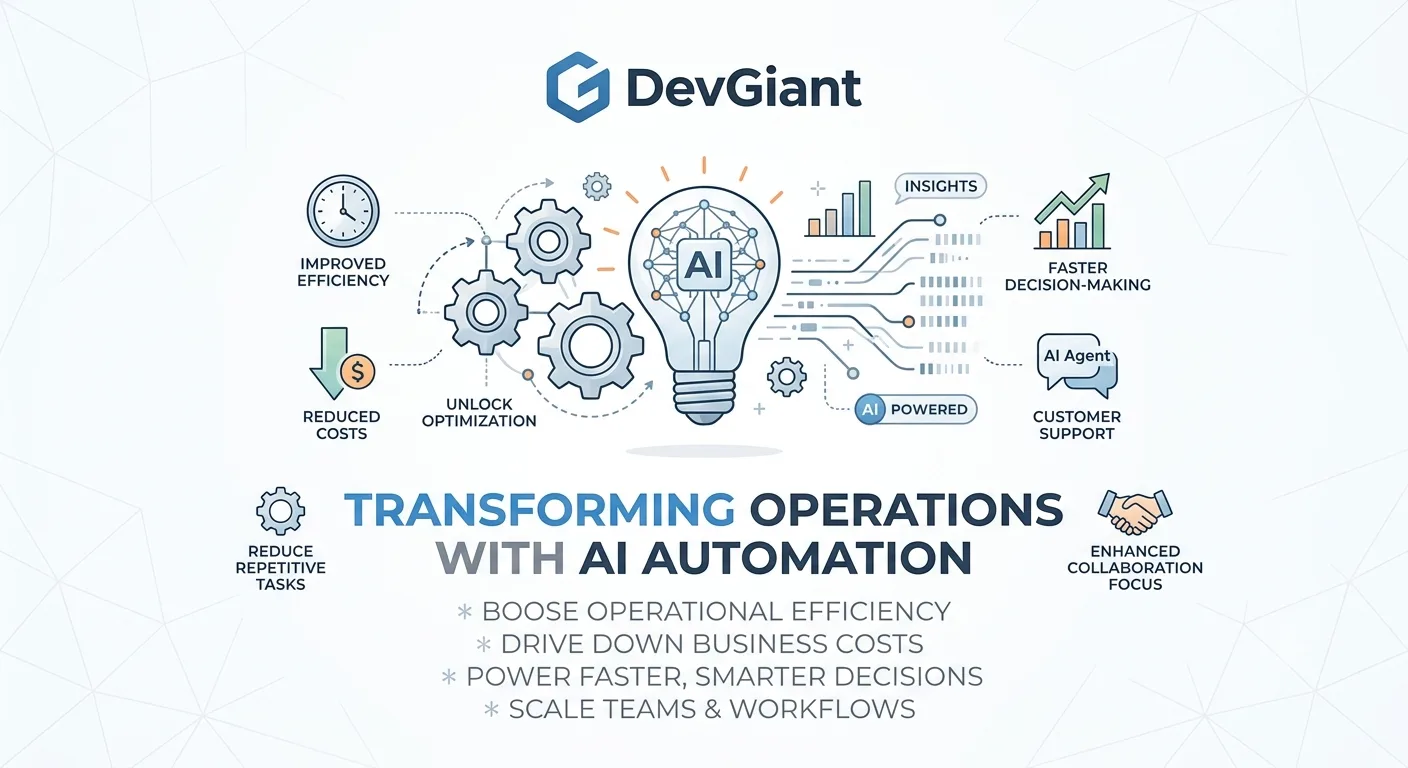
Why Businesses Are Investing in AI Agents
Organizations are constantly looking for ways to increase
efficiency while reducing costs.
AI agents provide several advantages:
Increased Productivity
Employees often spend hours performing repetitive tasks such
as data entry, report generation, customer communication, and scheduling.
AI agents can automate these activities, allowing teams to
focus on strategic work.
Reduced Operational Costs
By automating routine processes, businesses can reduce labor
costs and improve operational efficiency without increasing headcount.
Faster Decision Making
AI agents can analyze data in real time and provide
recommendations, helping businesses make informed decisions faster.
Improved Customer Experience
AI-powered systems can deliver instant responses,
personalized recommendations, and 24/7 support.
Business Operations AI Agents Can Automate
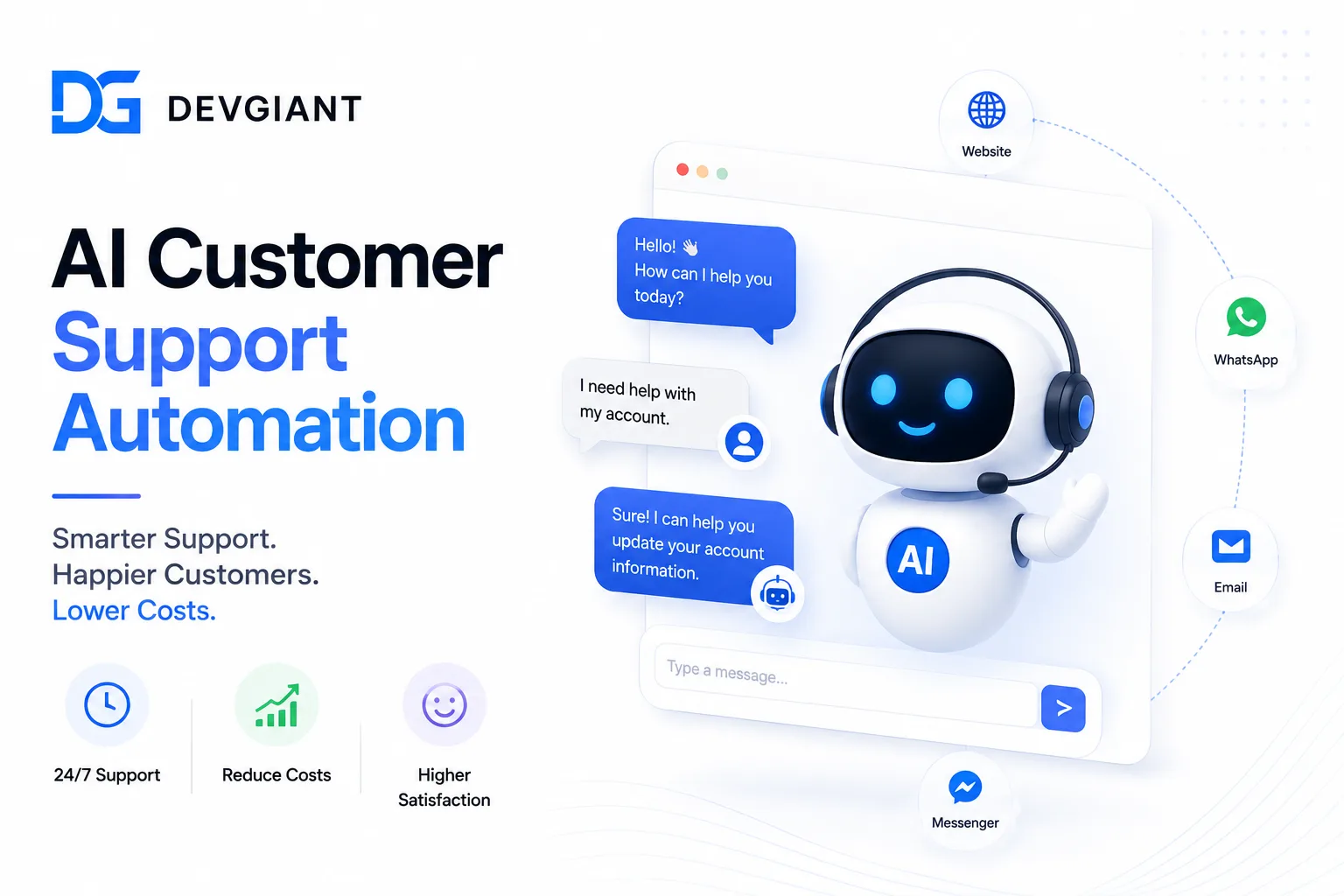
Customer Support Automation
One of the most common applications of AI agents is customer
service.
AI-powered support agents can:
- Answer
frequently asked questions
- Handle
support tickets
- Resolve
common issues
- Route
complex inquiries to human representatives
This reduces response times and improves customer
satisfaction.
Sales and Lead Qualification
AI agents can help sales teams by:
- Qualifying
leads automatically
- Scheduling
appointments
- Sending
personalized follow-ups
- Tracking
customer interactions
This ensures sales teams focus on high-value opportunities.
Internal Workflow Management
Businesses often struggle with inefficient internal
processes.
AI agents can automate:
- Employee
onboarding
- Task
assignment
- Document
processing
- Meeting
scheduling
- Approval
workflows
This improves collaboration and reduces administrative
overhead.
Financial Operations
Finance teams can benefit significantly from AI automation.
AI agents can:
- Process
invoices
- Track
expenses
- Generate
financial reports
- Monitor
cash flow
- Detect
anomalies and fraud risks
This improves accuracy and reduces manual work.
HR and Recruitment
Recruitment is often time-consuming and resource-intensive.
AI agents can assist by:
- Screening
resumes
- Scheduling
interviews
- Managing
candidate communications
- Answering
employee questions
This allows HR teams to focus on strategic talent
management.
Real-World Examples of AI Agents in Business
E-commerce
AI agents help online stores by:
- Managing
customer inquiries
- Recommending
products
- Tracking
orders
- Automating
inventory alerts
SaaS Companies
Software companies use AI agents for:
- Customer
onboarding
- Product
guidance
- Technical
support
- User
engagement analysis
Real Estate
Property businesses leverage AI agents to:
- Qualify
leads
- Schedule
property visits
- Respond
to inquiries
- Manage
tenant communications
Healthcare
Healthcare providers use AI systems to:
- Schedule
appointments
- Process
patient information
- Handle
routine administrative tasks
Key Benefits of AI Agents for Businesses
1. Scalability
AI agents can handle thousands of interactions
simultaneously, allowing businesses to scale without significantly increasing
operational costs.
2. Availability
Unlike human employees, AI agents can operate 24/7, ensuring
continuous support and business operations.
3. Accuracy
AI systems reduce human error in repetitive tasks, improving
consistency and reliability.
4. Data-Driven Insights
AI agents collect and analyze valuable business data,
helping organizations identify opportunities for growth and optimization.
Challenges Businesses Should Consider
While AI agents offer significant benefits, successful
implementation requires proper planning.
Businesses should consider:
- Data
quality
- Security
and compliance requirements
- Integration
with existing systems
- Employee
training and adoption
The most successful implementations combine AI automation
with human oversight rather than replacing people entirely.
How to Implement AI Agents in Your Business
Step 1: Identify Repetitive Processes
Start by identifying tasks that consume significant time and
resources.
Step 2: Define Automation Goals
Determine whether your objective is to:
- Reduce
costs
- Improve
customer experience
- Increase
productivity
- Accelerate
growth
Step 3: Choose the Right Technology
Select AI solutions that integrate with your existing
systems and support your business objectives.
Step 4: Start Small
Implement AI agents in one department or workflow before
expanding across the organization.
Step 5: Measure Results
Track performance metrics such as:
- Time
savings
- Cost
reduction
- Customer
satisfaction
- Employee
productivity
The Future of AI Agents
AI agents are becoming increasingly sophisticated and
capable of handling more complex tasks.
As technology advances, businesses can expect AI agents to:
- Manage
end-to-end workflows
- Deliver
more personalized customer experiences
- Improve
decision-making processes
- Enable
greater operational efficiency
Organizations that adopt AI automation early will be better
positioned to compete in a rapidly evolving digital landscape.
Conclusion
AI agents are redefining how businesses operate by
automating repetitive tasks, improving efficiency, and enabling smarter
decision-making.
From customer support and sales automation to financial
operations and workflow management, AI agents help organizations scale faster
while reducing operational costs.
Businesses that strategically implement AI agents today can
unlock significant productivity gains and create a strong foundation for future
growth.
Whether you're looking to streamline operations, enhance customer experiences, or improve profitability, AI agents offer a powerful solution for modern business automation.
Ready to Implement AI Automation in Your Business?
AI agents can help your organization reduce operational costs, automate repetitive workflows, improve customer experiences, and scale more efficiently.
At DevGiant, we design and develop custom AI automation solutions tailored to your business needs. Whether you're looking to automate customer support, streamline internal operations, or build intelligent AI-powered workflows, our team can help you identify the right opportunities and implement scalable solutions.
Explore our AI Automation Services or contact our team to discuss how AI can transform your business operations.