How SAP + Middleware Integration Enables Enterprise-Grade Flexibility and Modernization in 2026
Introduction
Enterprises operating on SAP often face the same challenge: the core system is powerful, but it can be rigid. SAP is designed to manage large-scale business processes, yet many teams need tools that are faster, more user-friendly, and more adaptable to operational realities. Whether it’s a warehouse team needing mobile access, a field force requiring simplified workflows, or a business unit seeking real-time data without navigating complex interfaces — SAP alone cannot always satisfy these demands.
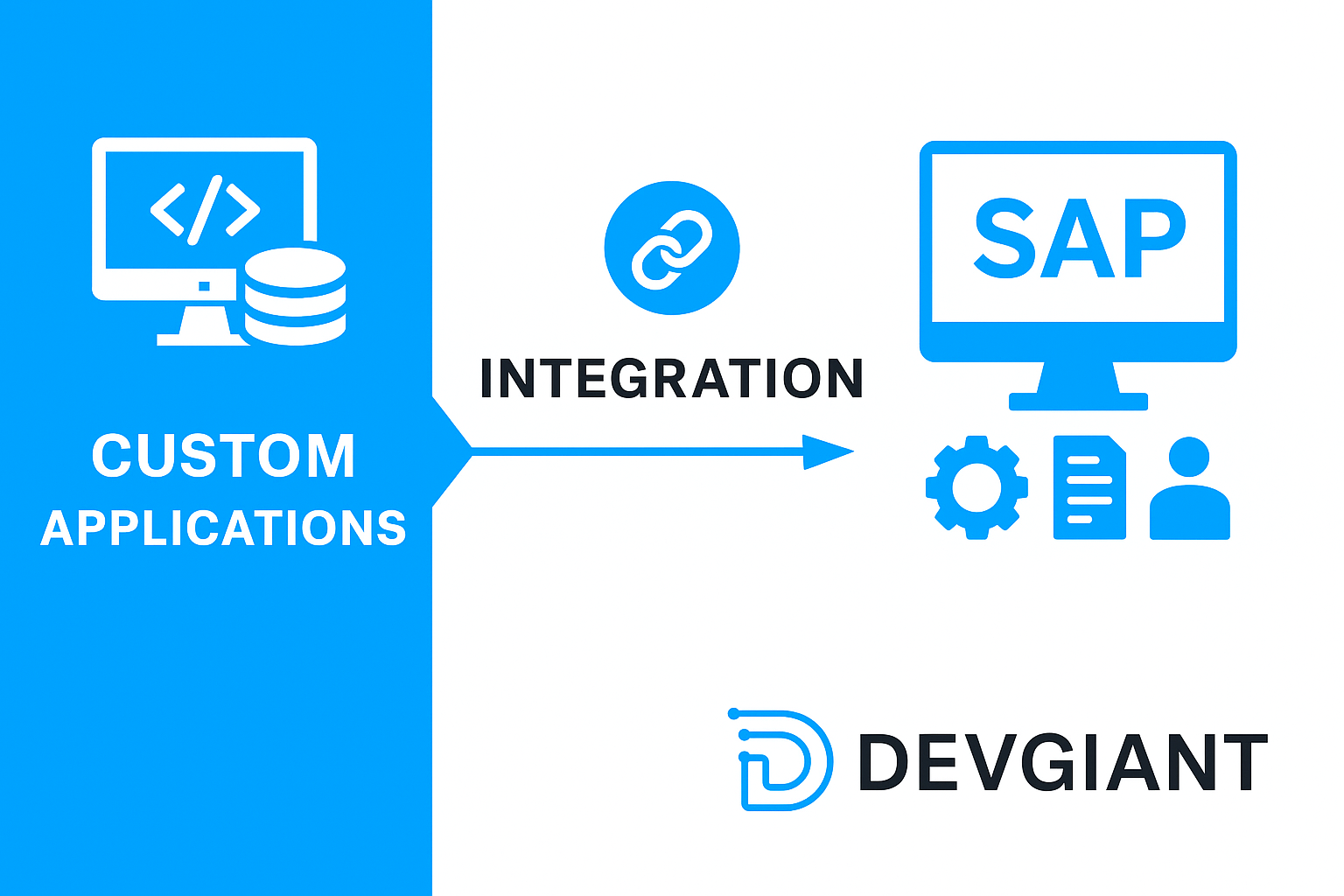
This is where middleware applications come into the picture. Instead of modifying SAP directly — a process that is costly, slow, and difficult to scale — companies are leveraging custom-built middleware solutions that integrate with SAP through APIs, BAPIs, or integration layers. These applications extend SAP functionality while keeping the core system stable.
In 2026, SAP + middleware integration has become one of the most strategic ways for enterprises to modernize operations without disrupting mission-critical systems.
Why Enterprises Need Middleware Between SAP and Their Operations
The gap between SAP’s capability and frontline operational needs has widened over time. SAP is excellent at centralized logic, financial governance, inventory tracking, and enterprise data flows. But everyday users — especially in warehouses, manufacturing floors, field operations, and logistics — require simplified interfaces, rapid interaction, and mobility.
Middleware applications solve this problem by acting as a flexible operational layer between SAP and the business environment. They communicate with SAP in the background while giving employees intuitive workflows tailored to their tasks.
With this approach, enterprises avoid system overload, reduce training requirements, and improve operational accuracy.
Modernizing Inventory and Warehouse Operations
One of the most common use cases for SAP integration is inventory management. SAP provides robust data structures, but warehouse staff typically need mobile-friendly, fast, and streamlined tools — something SAP’s native UI struggles to provide.
Through a middleware app, staff can perform tasks such as scanning items, updating counts, managing stock movements, recording damaged goods, and adjusting bins using a simple mobile interface. The app syncs with SAP in real time, ensuring data accuracy without requiring employees to navigate SAP transactions.
This eliminates manual errors, accelerates workflows, and ensures the ERP remains the single source of truth.
Extending SAP to the Field Through Mobile Applications
Field operations are another area where SAP’s traditional interface creates friction. Technicians or field employees often need to manage service orders, update task statuses, record inspections, or log material usage while on the move.
A custom middleware mobile app allows them to perform these actions quickly, even offline if needed. Once reconnected, the system syncs back to SAP automatically. This hybrid model is significantly more efficient and practical than relying solely on SAP GUI or SAP Fiori in environments where connectivity and speed are critical.
Enterprises benefit from improved service delivery, faster updates, and stronger compliance tracking.
Streamlining Manufacturing Workflows
Manufacturing teams often need real-time visibility into production activities, machine status, material consumption, and work order progress. Middleware applications allow factories to connect production line data, IoT devices, and operator interfaces directly to SAP without altering core ERP functionality.
Supervisors receive live insights into production efficiency, while SAP gets accurate data from the shop floor. Material requests, confirmations, and quality checks can be completed from dedicated mobile or web apps rather than complex SAP screens.
This integration supports predictive maintenance, reduces scrap, and helps factories operate with greater consistency.
Enhancing Business Agility Without Modifying SAP Core
Modifying SAP itself is expensive and introduces long-term dependencies that slow innovation. Middleware allows enterprises to innovate rapidly by building new workflows, automation layers, mobile tools, or dashboards without touching SAP core configurations.
New features can be released in weeks instead of months. Teams can adapt processes anytime. The business gains the flexibility of a modern application infrastructure while keeping SAP stable and secure.
This model turns SAP into a powerful backend engine while middleware becomes the user-facing experience.
Creating a Unified System Through Integration
Middleware applications often serve as hubs that connect SAP with other systems such as:
- eCommerce platforms
- Supplier networks
- Manufacturing equipment
- IoT sensors
- CRM tools
- Third-party logistics
- HR and payroll platforms
By placing middleware between SAP and external systems, enterprises avoid complexity, reduce integration conflicts, and maintain a consistent data flow. Each system can evolve independently while SAP remains the backbone of business logic.
Data Accuracy and Governance Through Controlled Workflows
Custom middleware solutions enforce structured workflows that prevent inconsistent data entry. Whether it’s a warehouse worker recording stock adjustments or a field engineer updating service tasks, every action is validated before reaching SAP.
This ensures that SAP receives clean, consistent, and audit-ready data. The operational teams benefit from simpler interfaces, while the business benefits from strict data governance.
How DevGiant Helps Enterprises Build SAP-Integrated Middleware
DevGiant specializes in developing custom middleware platforms that extend SAP into modern, efficient, and user-centric applications. Our solutions include mobile inventory apps, field service applications, production monitoring tools, warehouse automation interfaces, and operational dashboards.
We design middleware systems that integrate seamlessly with SAP through APIs, RFCs, or cloud connectors, ensuring real-time data synchronization and enterprise security. Our tailored MVP approach helps enterprises adopt new capabilities quickly while minimizing risk and cost.
Conclusion
SAP remains one of the most reliable and powerful enterprise systems in the world, but to meet modern operational demands, it must be supported by flexible, user-friendly technology. Middleware integration offers a practical way for companies to extend SAP, improve day-to-day workflows, support mobility, and modernize operations without undertaking expensive system overhauls.
In 2026 and beyond, enterprises that adopt SAP-integrated middleware will gain greater agility, operational precision, and long-term scalability — all while preserving the integrity of their core ERP systems.