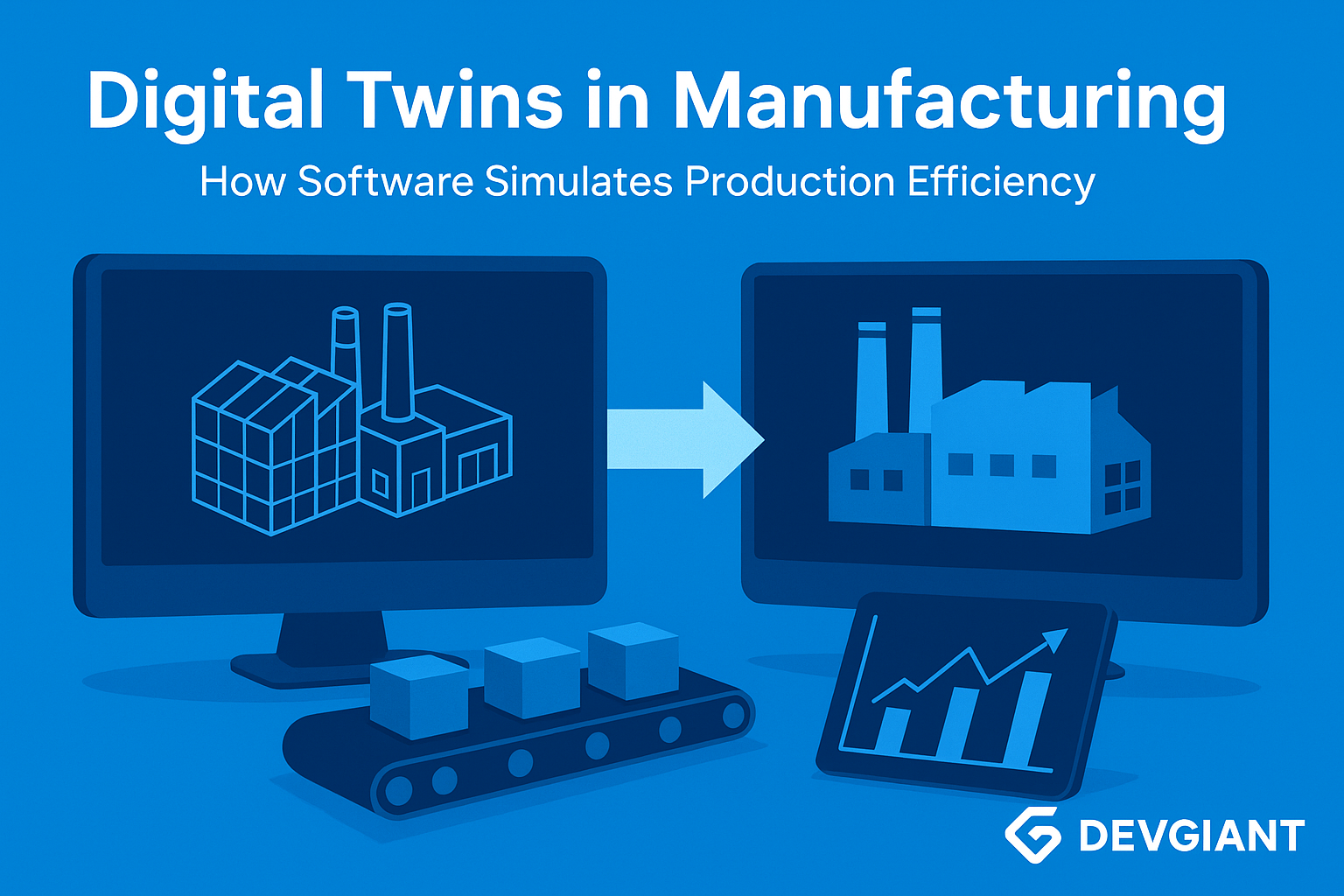
Digital Twins in Manufacturing: How Software Simulates Production Efficiency in 2026
Introduction
Manufacturers across the world are adopting digital twins as a strategic way to improve productivity, reduce operational risks, and optimize decision-making. A digital twin is a virtual representation of a physical asset, machine, production line, or entire facility — continuously updated with real-time data. In 2026, this technology is reshaping how manufacturing leaders plan, operate, and scale their production environments.
While IoT sensors and ERP systems provide raw data, digital twins convert that data into meaningful simulations. They allow manufacturers to test scenarios, monitor machine behavior, and predict outcomes without interrupting operations. When supported by custom software, digital twins become a powerful operational tool that aligns engineering, maintenance, quality control, and management around one unified digital model.
Simulating Production Before It Happens
Manufacturing operations have always relied on reactive processes. When issues occur, teams respond. When demand increases, schedules adjust. When machines break down, production pauses. Digital twins reverse this pattern.
By mirroring the entire production process in a digital environment, companies can simulate outcomes before they occur in the real world. Production managers can evaluate how changes in speed, configuration, or resource allocation will impact output. Quality teams can identify potential defect points long before products leave the line. Operational leaders can test new workflows or layouts without any physical disruption.
This shift from reactive control to proactive simulation is one of the biggest advantages digital twins offer to modern factories.
Improving Machine Reliability Through Continuous Insight
Machine reliability is one of the most critical metrics in manufacturing. Digital twins enhance reliability by capturing real-time performance data from IoT sensors and translating it into a visual, dynamic model of equipment health. Changes in vibration, temperature, pressure, or operational cycles become part of the twin’s behavior.
As the system learns from historical patterns, it becomes capable of predicting failures, identifying risks, and recommending maintenance activities. This enables maintenance teams to prevent breakdowns rather than react to them.
Unlike standalone predictive maintenance systems, digital twins provide context by showing how one machine’s condition affects the entire production line. This holistic insight helps teams plan maintenance with precision and avoid bottlenecks.
Strengthening Quality Control
Quality issues are often the result of subtle variations in process conditions. Digital twins allow quality engineers to monitor production variables continuously and trace defects back to specific process deviations. When deviations occur, the twin highlights them visually and identifies correlations that may not be visible in traditional quality reports.
Over time, the twin becomes a source of intelligence that supports consistent product quality. Manufacturers can detect problems earlier, understand cause-and-effect relationships, and refine process parameters for optimal outcomes.
This level of visibility is especially valuable in industries with strict compliance requirements or high cost of failure.
Supporting Data-Driven Production Planning
Digital twins integrate production schedules, resource availability, machine capacity, and demand forecasts into a single decision-making framework. Managers can simulate different scenarios — such as increased demand, workforce changes, or equipment downtime — and evaluate their impact instantly.
This helps planning teams determine the most efficient scheduling sequence, optimize resource allocation, and minimize costs associated with overproduction or delays. Because the twin reflects real-time data, decisions remain accurate even as conditions change throughout the day.
With a digital twin in place, production planning becomes a dynamic process rather than a static plan.
Enhancing Factory Layout and Operational Optimization
Adjusting the physical layout of a factory is expensive and time-consuming. Digital twins give manufacturers the ability to test layout changes digitally before implementing them in the real world. They can analyze:
- Material flow
- Space utilization
- Worker movement
- Machine placement
- Storage configurations
This reduces the risk associated with costly restructuring projects and supports safer, more ergonomic work environments.
As manufacturing evolves toward more flexible and modular production systems, layout simulation becomes increasingly important.
Integrating Digital Twins With Existing Systems
For digital twins to function effectively, they must connect with data sources across the factory. IoT sensors, MES platforms, SAP or other ERP systems, production monitoring tools, and quality tracking systems all feed information into the twin.
Custom software plays a critical role in this integration. Middleware applications handle data transformation, synchronization, and visualization. Dashboards present insights to operational teams in a clear and actionable form. When built around the real workflows of the business, these tools ensure that the twin delivers meaningful operational value instead of raw data.
Manufacturers often find that without custom software, the digital twin becomes fragmented or difficult to use. Integration is the key to unlocking the technology’s full potential.
Why Custom Solutions Drive the Success of Digital Twins
Digital twins succeed when they match the complexity and structure of real manufacturing operations. Off-the-shelf systems rarely align perfectly with a company’s process flow, equipment types, or data governance requirements. Custom applications allow manufacturers to design twins that reflect actual machinery, workflows, and business objectives.
They also ensure that the digital twin remains scalable. As more equipment is added, processes change, or new analytics are required, the custom platform evolves alongside the factory.
The ability to adapt the digital twin to operational needs is essential for long-term competitiveness.
How DevGiant Supports Digital Twin Implementations
DevGiant works with manufacturers to design and build custom software ecosystems that support digital twins. Our solutions include IoT data connectors, real-time dashboards, simulation tools, predictive analytics platforms, and SAP-integrated middleware. By focusing on operational accuracy, scalability, and user experience, we help factories unlock the full benefits of digital twin technology.
Our tailored MVP approach enables manufacturers to begin with a focused simulation and expand into full facility-wide digital twin environments as value is demonstrated.
Conclusion
Digital twins are transforming manufacturing into a more intelligent, efficient, and predictive industry. By combining real-time data, simulation capabilities, and custom software, factories gain unprecedented visibility into their operations. The result is greater reliability, higher quality, more efficient planning, and a stronger foundation for long-term innovation.
As manufacturers enter 2026, digital twins have evolved from experimental tools to essential components of modern production environments. Companies that adopt this technology early will gain a clear competitive advantage.