AI in Real Estate: Use Cases for Property Management
The real estate industry is experiencing a technological revolution, with artificial intelligence leading the charge in property management innovation. Property managers overseeing portfolios of any size are discovering that AI-powered tools can dramatically reduce operational costs, improve tenant satisfaction, and maximize property values. This transformation goes beyond simple automation—AI is fundamentally changing how properties are managed, maintained, and monetized.
1. Automated Tenant Screening and Selection
AI algorithms can analyze thousands of data points from rental applications in seconds, assessing creditworthiness, rental history, employment stability, and even behavioral patterns. Machine learning models predict tenant reliability with greater accuracy than traditional methods, reducing default rates by up to 30%. These systems process background checks, verify income sources, and flag potential red flags while maintaining fair housing compliance through bias-detection algorithms.
2. Predictive Maintenance and Building Operations
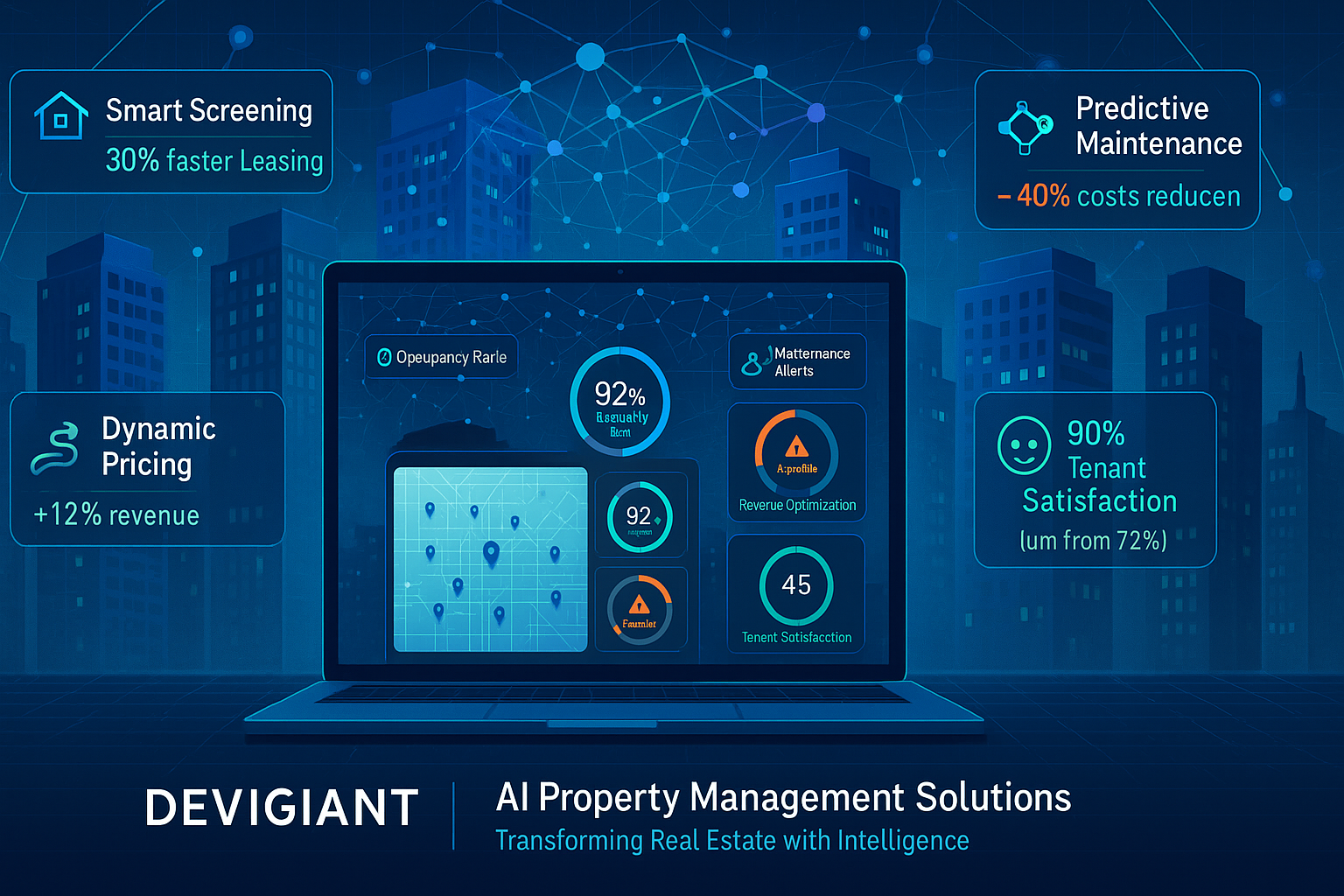
Rather than waiting for systems to fail, AI monitors building systems in real-time through IoT sensors, predicting equipment failures before they occur. HVAC systems, elevators, plumbing, and electrical infrastructure are continuously analyzed for performance degradation. Property managers receive maintenance alerts weeks in advance, allowing scheduled repairs during off-hours and preventing costly emergency breakdowns. This approach typically reduces maintenance costs by 25-40% while extending equipment lifespan.
3. Dynamic Rent Optimization
AI pricing engines analyze local market conditions, seasonal trends, comparable properties, amenities, and even local economic indicators to recommend optimal rental rates. These systems adjust pricing strategies in real-time, maximizing occupancy while optimizing revenue. Properties using AI-driven pricing see average revenue increases of 5-12% compared to static pricing models, with vacancy rates dropping as pricing becomes more competitive and responsive to market demand.
4. Automated Lease Management and Renewals
Document processing AI handles lease agreements from creation through renewal, automatically flagging important dates, escalation clauses, and renewal opportunities. Natural language processing extracts key terms from contracts, while automated systems send timely renewal reminders and generate customized lease renewal offers based on tenant history and market conditions. This automation reduces administrative overhead by up to 60%.
5. Intelligent Energy Management
AI systems learn occupancy patterns and weather forecasts to optimize heating, cooling, and lighting across properties. Machine learning algorithms continuously refine energy usage strategies, reducing utility costs by 20-35% while maintaining comfort standards. Smart systems can even predict energy price fluctuations and adjust consumption accordingly, participating in demand-response programs that generate additional revenue.
6. Enhanced Security and Access Control
Computer vision and AI analytics monitor security cameras for unusual activities, unauthorized access, or safety hazards. Facial recognition systems can provide seamless access for residents while flagging unknown individuals. AI-powered systems learn normal patterns of activity and immediately alert management to anomalies, from potential break-ins to slip-and-fall hazards in common areas.
7. Automated Maintenance Request Management
AI chatbots and virtual assistants handle routine tenant inquiries and maintenance requests 24/7, categorizing issues by urgency and routing them to appropriate personnel. Image recognition can analyze photos uploaded by tenants to diagnose problems and even provide immediate troubleshooting guidance. This system reduces response times from hours to minutes while freeing property managers to focus on complex issues.
8. Portfolio Performance Analytics
AI-powered dashboards aggregate data across entire property portfolios, identifying trends, opportunities, and problem areas in real-time. Predictive analytics forecast occupancy rates, maintenance needs, and financial performance months in advance. These insights enable data-driven decision-making for acquisitions, renovations, and strategic planning, with portfolio managers reporting 30-50% improvement in decision-making speed and accuracy.
9. Tenant Communication and Engagement
AI systems personalize communication with tenants based on their preferences, history, and behavior patterns. Automated systems handle routine communications while flagging situations requiring personal attention. Sentiment analysis monitors tenant satisfaction levels, predicting lease renewals and identifying at-risk tenants before they give notice, improving retention rates by 15-25%.
10. Compliance and Risk Management
AI continuously monitors regulatory requirements across jurisdictions, ensuring properties remain compliant with local, state, and federal regulations. These systems track safety inspections, license renewals, insurance requirements, and fair housing compliance. Automated documentation and reporting reduce legal risk while minimizing time spent on administrative compliance tasks.
The ROI of AI in Property Management
Properties implementing comprehensive AI solutions typically see:
- 25-40% reduction in operational costs
- 15-30% improvement in tenant retention
- 20-35% decrease in maintenance expenses
- 5-12% increase in rental revenue
- 60-80% reduction in administrative time
Implementation Considerations
Successful AI adoption requires careful planning around data integration, staff training, and phased implementation. Start with high-impact areas like maintenance prediction or tenant screening, then expand as teams become comfortable with the technology. Choose platforms that integrate with existing property management software to avoid data silos.
Conclusion
AI is no longer a futuristic concept in property management—it's a practical necessity for staying competitive. From predictive maintenance to dynamic pricing, AI tools are delivering measurable improvements in efficiency, profitability, and tenant satisfaction. Property managers who embrace these technologies position themselves at the forefront of an industry transformation, while those who delay risk falling behind more agile competitors.