AI for Tenant Experience and Leasing Automation
The tenant experience begins long before someone signs a lease and continues throughout their residency. Artificial intelligence is transforming every touchpoint of this journey, from initial property discovery through lease renewal. AI-powered tools automate routine tasks, personalize interactions, and anticipate needs, creating superior experiences while dramatically reducing operational costs. Property managers using AI report vacancy reductions of 20-30%, faster lease cycles, and tenant satisfaction scores exceeding 90%.
AI-Powered Leasing Chatbots
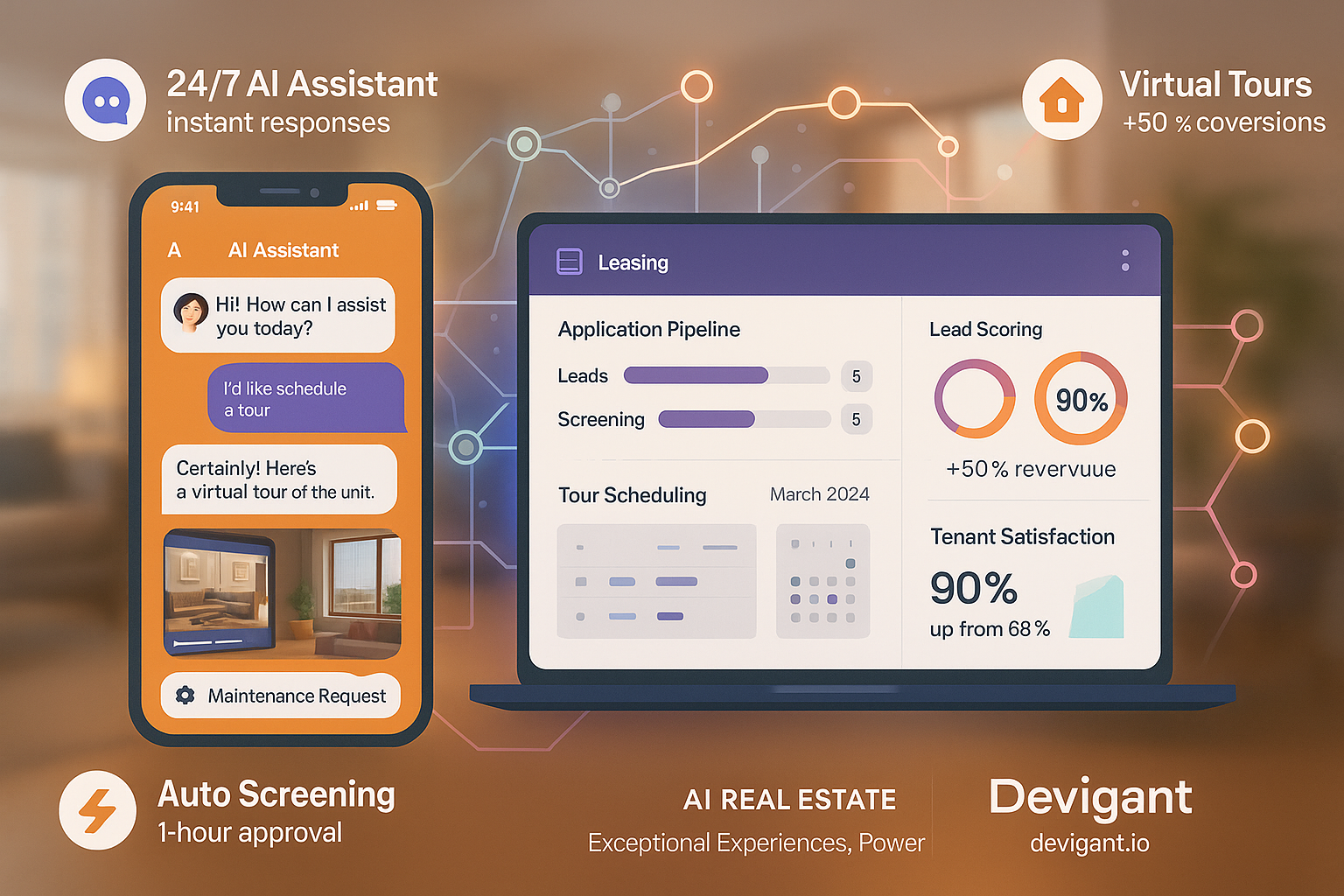
Modern leasing chatbots handle prospective tenant inquiries 24/7, answering questions about availability, amenities, pricing, pet policies, and application processes instantly. Natural language processing enables conversational interactions that feel human rather than robotic. These systems schedule tours, send property information, and qualify leads automatically. Unlike human staff limited to business hours, AI assistants engage prospects at their convenience—often evenings and weekends when interest peaks. Properties using leasing chatbots convert 35-50% more inquiries into tours compared to those relying solely on phone and email outreach.
Virtual and Self-Guided Tours
AI enables compelling virtual property experiences that accommodate remote prospects and busy schedules. Computer vision-powered virtual tours allow prospects to explore properties from anywhere, with AI narration highlighting features and answering questions through voice interaction. For in-person visits, self-guided tour systems grant secure access through mobile credentials, with AI providing interactive property information through smartphones. Prospects proceed at their own pace without requiring staff accompaniment. This flexibility expands the pool of potential tenants while reducing the time property managers spend on tours by 60-70%.
Intelligent Lead Qualification and Routing
Not all inquiries represent equally qualified prospects. AI analyzes incoming leads based on income signals, urgency indicators, engagement level, property preferences, and likelihood to lease. Systems assign lead scores and route high-priority prospects to human leasing agents while nurturing lower-priority leads through automated sequences. This intelligence ensures human attention focuses where it matters most while no prospect falls through the cracks. Lead-to-lease conversion rates improve by 25-40% through this targeted approach compared to first-come-first-served models.
Automated Application and Screening
AI streamlines the application process by pre-filling forms from existing data, verifying information across databases, and conducting background checks instantly. Machine learning models assess creditworthiness, employment stability, rental history, and risk factors simultaneously, providing approval decisions in minutes rather than days. These systems maintain fair housing compliance through bias-detection algorithms that ensure consistent evaluation criteria. Faster processing gives properties competitive advantages in hot markets where qualified applicants often have multiple options. Application-to-approval time decreases from 3-5 days to under an hour in many cases.
Dynamic Pricing and Revenue Optimization
Similar to airlines and hotels, AI enables dynamic pricing that maximizes revenue while maintaining high occupancy. Machine learning models analyze market conditions, seasonal patterns, competitor pricing, unit-specific features, and current demand to recommend optimal rental rates for each unit. As market conditions shift, prices adjust automatically—increasing when demand is strong, decreasing strategically to fill units before extended vacancies occur. Properties using AI pricing see revenue increases of 5-12% compared to static pricing strategies, while minimizing vacancy losses that dramatically impact net operating income.
Personalized Communication and Marketing
AI personalizes marketing messages and communication cadence based on prospect behavior and preferences. Someone who viewed three-bedroom units receives different content than a studio shopper. Prospects who haven't responded recently receive reengagement messages highlighting new availability or incentives. Email subject lines, send times, and content are optimized through A/B testing at scale. This personalization increases email open rates by 40-60% and click-through rates by 50-80% compared to one-size-fits-all approaches. Prospects feel understood rather than receiving generic mass communications.
Move-In Experience Automation
AI coordinates the complex move-in process seamlessly. Systems automatically schedule move-in appointments, send reminders with checklists, coordinate utility transfers, provide digital access credentials, and conduct virtual or in-person unit walkthroughs. Move-in documentation is completed digitally with e-signatures, eliminating paperwork delays. AI-generated welcome packages highlight property amenities, community events, local recommendations, and important contacts. This orchestration reduces move-in coordination time by 75% while creating polished first impressions that set the tone for positive tenant relationships.
Intelligent Maintenance Request Handling
Throughout residency, AI transforms how tenants report and resolve maintenance issues. Chatbots accept requests 24/7, asking clarifying questions and sometimes providing immediate troubleshooting guidance for simple issues. Image recognition analyzes photos uploaded by tenants, helping diagnose problems and determine urgency. Requests are automatically categorized, prioritized, and routed to appropriate maintenance personnel with relevant context. Tenants receive real-time status updates without calling the office. AI even predicts maintenance needs before tenants report them by analyzing sensor data from smart home systems. Average resolution time decreases by 40% while tenant satisfaction with maintenance increases significantly.
Predictive Tenant Retention
AI identifies at-risk tenants months before lease expiration by analyzing behavior patterns. Decreased app engagement, maintenance request frequency, utility usage changes, and communication sentiment all provide signals. Property managers receive alerts about tenants likely to leave, enabling proactive outreach to address concerns before they become decisive. AI suggests personalized retention offers based on tenant value and market conditions—rent discounts for high-value tenants, unit upgrades for those frustrated with current spaces, flexible lease terms for those with changing circumstances. This approach improves retention rates by 15-25%, dramatically reducing costly turnover.
Automated Lease Renewal Process
As leases near expiration, AI orchestrates renewal campaigns with personalized offers and optimal timing. Systems analyze tenant satisfaction indicators, payment history, market conditions, and individual circumstances to recommend renewal terms likely to be accepted. Communications are timed strategically—early enough to prevent tenants from actively apartment shopping, but not so early that commitment seems burdensome. Renewal rates for AI-managed processes exceed 70%, compared to 50-60% industry averages, as the personalized approach and streamlined digital process make staying the path of least resistance.
Community Building and Engagement
AI fosters tenant community through smart event planning and communication. Systems analyze resident interests, demographics, and participation patterns to recommend events likely to attract attendance. Automated invitations, reminders, and follow-ups increase participation rates. AI-moderated community platforms enable residents to connect while automatically filtering inappropriate content. Virtual assistants answer questions about community amenities, events, and services. Strong communities lead to higher satisfaction, better property care, and improved retention—residents feel connected to their building, not just occupying space.
Smart Home Integration
Properties offering AI-powered smart home features create differentiated experiences. Voice-controlled assistants adjust thermostats, lighting, and entertainment systems. AI learns resident preferences, automatically setting optimal temperatures and lighting schedules. Energy monitoring with AI recommendations helps residents reduce utility costs. Smart locks and cameras provide security and convenience. These features attract tech-savvy renters willing to pay premium rents, with smart-home-equipped units commanding 5-10% rent premiums while experiencing lower vacancy rates.
Amenity Booking and Management
AI streamlines amenity access through mobile apps that handle reservations for gyms, pools, party rooms, parking spots, and other shared spaces. Systems prevent double-booking, send reminder notifications, and even recommend optimal times based on typical usage patterns. In buildings with limited amenities like guest parking or storage, AI manages waitlists and allocates access fairly. Usage analytics help property managers understand which amenities provide value versus consuming resources, informing improvement decisions and marketing messaging.
Multi-Language Support and Accessibility
AI translation enables property management in any language, breaking down barriers for diverse tenant populations. Chatbots converse fluently in dozens of languages, automatically detecting preferred language and translating all communications. Voice interfaces support tenants with visual impairments or reading difficulties. This inclusivity expands the addressable tenant population while creating welcoming environments that respect diversity. Properties in multicultural areas find multilingual AI capabilities essential for competitive tenant service.
Sentiment Analysis and Satisfaction Monitoring
Rather than relying on occasional surveys, AI monitors tenant sentiment continuously through communication analysis. Natural language processing detects satisfaction levels, frustration, urgency, and specific concerns in emails, texts, and maintenance requests. Property managers receive dashboards showing overall sentiment trends and individual tenant flags requiring attention. This ongoing pulse check enables course corrections before dissatisfaction leads to negative reviews or non-renewals. Properties using sentiment analysis see Net Promoter Scores 20-30 points higher than those relying on annual surveys alone.
Operational Efficiency Gains
AI-powered tenant services and leasing automation deliver dramatic operational efficiency. Tasks consuming hours of staff time—answering routine questions, scheduling tours, processing applications, sending reminders—occur automatically. Leasing teams focus on high-value activities like building relationships and closing deals rather than administrative work. Maintenance coordinators spend time on complex problems rather than fielding routine requests and providing status updates. Properties report reducing leasing and management staff requirements by 30-50% while simultaneously improving service levels, creating significant cost savings that enhance net operating income.
Data-Driven Decision Making
The data generated through AI-powered tenant interactions provides unprecedented insights. Property managers understand which amenities attract attention, which marketing messages resonate, where communication breakdowns occur, and what drives satisfaction or turnover. These insights inform strategic decisions about renovations, amenity investments, marketing budget allocation, and policy changes. Rather than relying on intuition, managers make evidence-based decisions backed by comprehensive data about actual tenant preferences and behaviors.
Privacy and Trust Considerations
While AI enables personalized experiences, responsible implementation requires privacy protections. Transparent data policies, secure storage, and giving tenants control over their information builds essential trust. AI systems should enhance rather than surveil, providing value through convenience and personalization without creating Big Brother discomfort. Properties that communicate clearly about AI capabilities and benefits while respecting boundaries create positive relationships rather than privacy concerns that drive away prospects and residents.
Conclusion
Artificial intelligence is fundamentally transforming tenant experience and leasing operations. From the first inquiry through years of residency, AI creates seamless, personalized experiences while automating tasks that traditionally consumed significant staff time and resources. Properties leveraging AI effectively see measurable improvements in occupancy rates, tenant satisfaction, operational efficiency, and revenue. As tenant expectations rise and operational pressures intensify, AI transitions from competitive advantage to essential capability for successful property management. The question is no longer whether to implement AI-powered tenant services, but how quickly to deploy them before competitors gain insurmountable leads.